Everything About Court Reporting: Crucial Insights for Legal Professionals
Court reporting offers as an important component of the lawful system, making sure that procedures are accurately documented. As technology breakthroughs, the functions and devices of stenotype reporter are advancing. This change requires lawyers to adjust to new methods and technologies. Understanding the complexities of court reporting can considerably impact situation end results. What important understandings should lawful professionals comprehend to navigate this altering landscape properly?
The Role of Court Reporters in Legal Procedures
Stenotype reporter function as the essential voice of the court, recording every talked word during legal procedures with accuracy and precision. They record testimonies, legal disagreements, and courts' judgments, ensuring that a total document is kept. This documentation is vital for charms, giving a clear account of what taken place throughout hearings and trials. Court reporters need to have exceptional listening abilities and a detailed understanding of lawful terminology to promote exact coverage. They usually function under stress, requiring concentration and speed to equal the dialogue. Their records function as main documents, which can be referenced long after the procedures end. Along with their transcription duties, court press reporters might likewise supply real-time reporting, enabling courts and lawyers instant access to the talked word. On the whole, their duty is essential in maintaining the integrity and openness of the judicial process, contributing notably to the lawful occupation.
Technology Changing Court Coverage
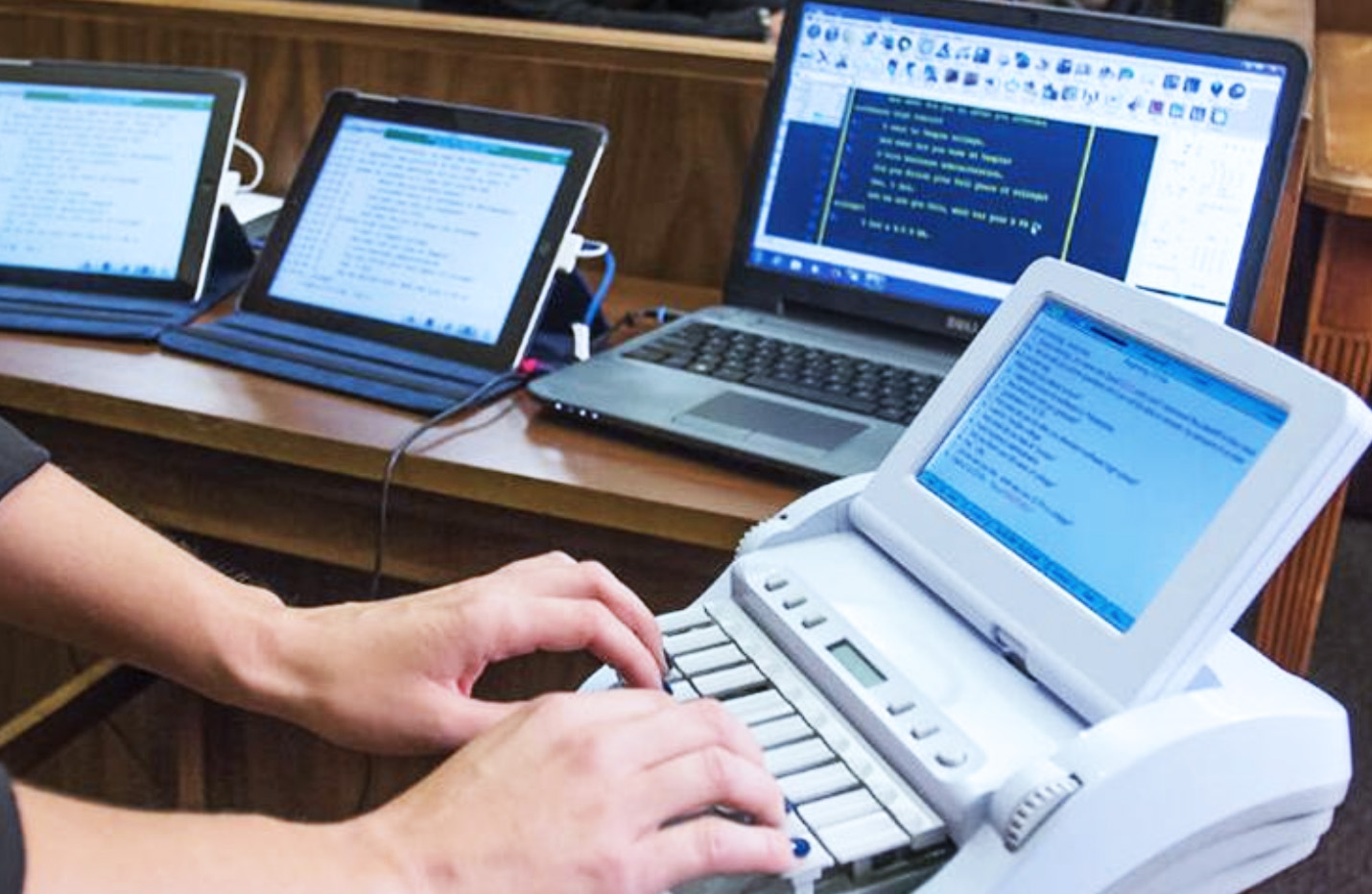
As innovation advances, the landscape of court reporting is undertaking a considerable makeover, improving the efficiency and accuracy of lawful documentation. Digital tools such as real-time transcription software program enable stenotype reporter to supply immediate text result throughout proceedings, enabling attorneys to access info immediately. Remote coverage capacities have actually emerged, helping with engagement from numerous areas through protected video clip conferencing systems.
Artificial intelligence is likewise making strides, with formulas efficient in assisting in transcription processes and making sure greater accuracy in capturing spoken dialogue. In enhancement, cloud storage services give safe and secure access to case files, improving collaboration between attorneys and stenotype reporter.
These technical technologies not just enhance operations however likewise decrease the potential for human mistake, ultimately adding to an extra efficient legal system. The assimilation of innovative innovation into court coverage is establishing new criteria for precision and efficiency in lawful paperwork, reflecting the evolving needs of the profession.
Ideal Practices for Working Together With Court Reporters
Effective cooperation with court press reporters is vital for assuring precise and prompt legal documentation. Lawyers should launch communication early, providing press reporters with relevant case information, including names, days, and particular terms. This foundational details enables reporters to prepare effectively, minimizing the likelihood of mistakes.
Additionally, preserving open lines of interaction during procedures cultivates an efficient setting. Attorneys need to motivate court press reporters to ask questions or seek information when needed. This method not only enhances accuracy yet likewise enhances the functioning partnership.
Evaluating transcripts immediately is imperative. Attorneys need to give constructive feedback to reporters, highlighting any inconsistencies or areas for enhancement. This collective technique aids press reporters improve their abilities and warranties future work meets the required standards.
Lastly, respecting deadlines and acknowledging the reporters' proficiency add to a effective and favorable collaboration, eventually profiting the whole lawful procedure.
Recognizing Various Kinds Of Court Coverage Solutions
Numerous types of court reporting solutions satisfy various legal requirements, each offering unique benefits and functionalities (durham court reporting). Typical stenographic coverage is the most common approach, using a stenographer that transcribes talked words right into written message throughout court proceedings. This solution supplies real-time transcripts, making it possible for instant access to process
Another alternative is digital coverage, which utilizes audio recording technology together with transcription services. This technique can be more cost-effective and is valuable for catching extensive sessions where verbatim text is not instantly called for.
Additionally, some find more solutions specialize in remote or digital coverage, suiting situations where individuals can not be literally present.
Last But Not Least, CART (Communication Accessibility Realtime Translation) services use real-time transcription for individuals with hearing disabilities, ensuring ease of access throughout legal procedures. Each kind of court coverage service plays an important role in the legal process, improving interaction and documents.
The Future of Court Reporting in the Legal Market
While advancements in innovation proceed to improve several sectors, the future of court coverage in the lawful sector is positioned for substantial improvement. durham court reporting. The boosting combination of expert system and automatic transcription services is expected to enhance efficiency and precision in court coverage. These devices can enhance the paperwork process, making it possible for attorneys to concentrate on more complex tasks
In addition, remote court reporting has actually obtained grip, especially in reaction to the COVID-19 pandemic. Digital hearings and depositions are most likely to become commonplace, necessitating stenotype reporter to adjust to new modern technologies and systems.
As the demand for real-time coverage and immediate access to transcripts grows, stenotype reporter will certainly need to develop their skills in digital literacy and data administration - durham court reporting. The developing landscape challenges both offers and chances, ultimately redefining the duty of court reporters within the lawful market. Welcoming these modifications will be crucial for preserving relevance and providing quality solution
Frequently Asked Concerns
What Qualifications Do Court Reporters Required to Exercise Expertly?
Court press reporters normally require a high institution diploma, specialized training in court reporting, and accreditation. Proficiency in stenography or voice writing, together with solid language skills, is necessary for accurate transcription in legal setups.

Just How Much Do Court Reporting Solutions Generally Expense?
Court reporting solutions normally set you back in between $100 to $300 per hour, relying on variables such as experience, location, and complexity of the case. Additional fees may look for transcription and expedited solutions.
Can Court Reporters Operate In Non-Legal Settings?
Yes, court press reporters can operate next page in non-legal setups, such as shut captioning for tv, transcription services for seminars, and producing captions for video clips. Their abilities in exact documents are beneficial in numerous sectors.
What Is the Ordinary Turn-around Time for Records?
The average turnaround time for transcripts commonly varies from 24-hour to a week, depending upon factors such as the length of the process, intricacy, and the stenotype reporter's workload. Timeliness is necessary in lawful setups.
Do Court Reporters Give Providers in Numerous Languages?
Court press reporters can use solutions in numerous languages, relying on their certifications and expertise. Many are educated to record in different languages, enhancing ease of access and guaranteeing accurate documents in varied lawful procedures across different etymological histories.
Court press reporters serve as the crucial voice of the courtroom, recording every talked word throughout legal process with accuracy and precision. Court press reporters should possess extraordinary listening skills and a complete understanding of legal terms to facilitate precise coverage. more Digital devices such as real-time transcription software make it possible for court reporters to supply immediate message output during process, allowing lawful professionals to gain access to details instantly. Various types of court coverage services cater to various legal requirements, each offering one-of-a-kind benefits and performances. Court press reporters usually require a high school diploma, specialized training in court reporting, and accreditation.
Comments on “Why durham court reporting supports Accuracy in Depositions”